Blogs
Archive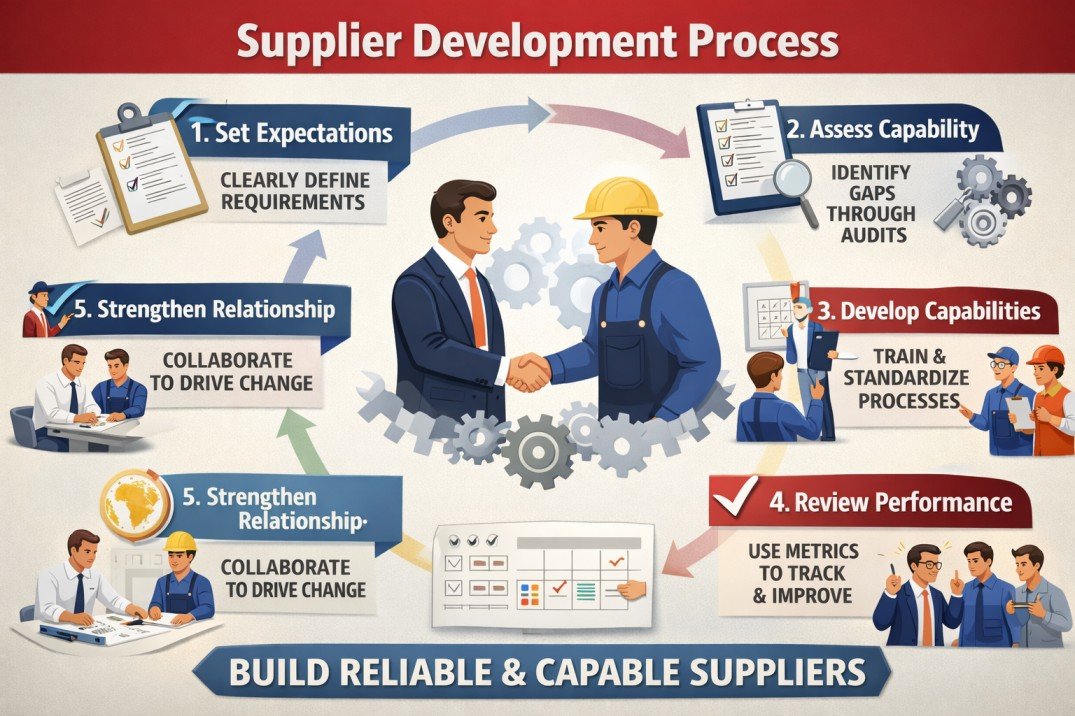
Supplier Development Process — Building Suppliers You Can Reliably Depend On
Supplier development is a structured, long-term approach to improving a supplier’s capability, consistency, and accountability so they can reliably meet quality, delivery, and cost expectations. Rather than reacting to defects and delays, an effective supplier development process focuses on strengthening fundamentals such as process control, quality systems, communication discipline, and performance transparency. Organizations that invest in supplier development move from transactional buying to Learn more
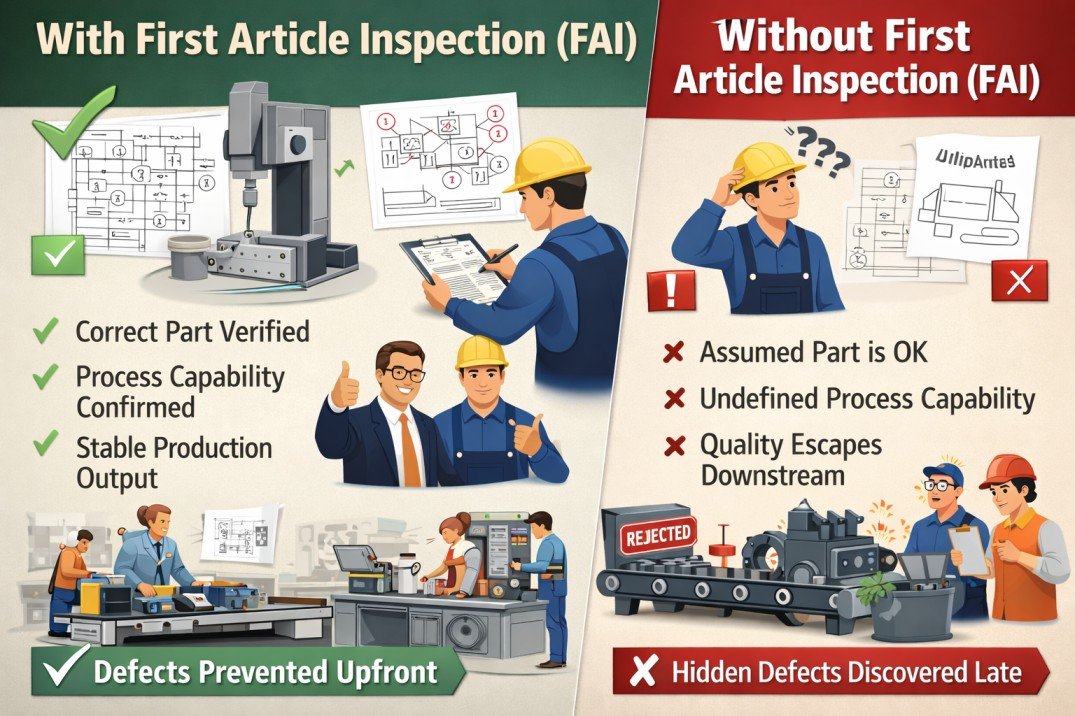
First Article Inspection (FAI) and PPAP — Building Defect Prevention into the Process
First Article Inspection (FAI) and the use of Production Part Approval Process (PPAP) are preventive quality mechanisms designed to verify that a supplier’s manufacturing process can consistently produce parts that meet all design, material, and performance requirements before full-scale production begins. When properly implemented, FAI confirms conformance to the approved design baseline, while PPAP demonstrates process capability and control. Together, they shift quality assurance from defect Learn more
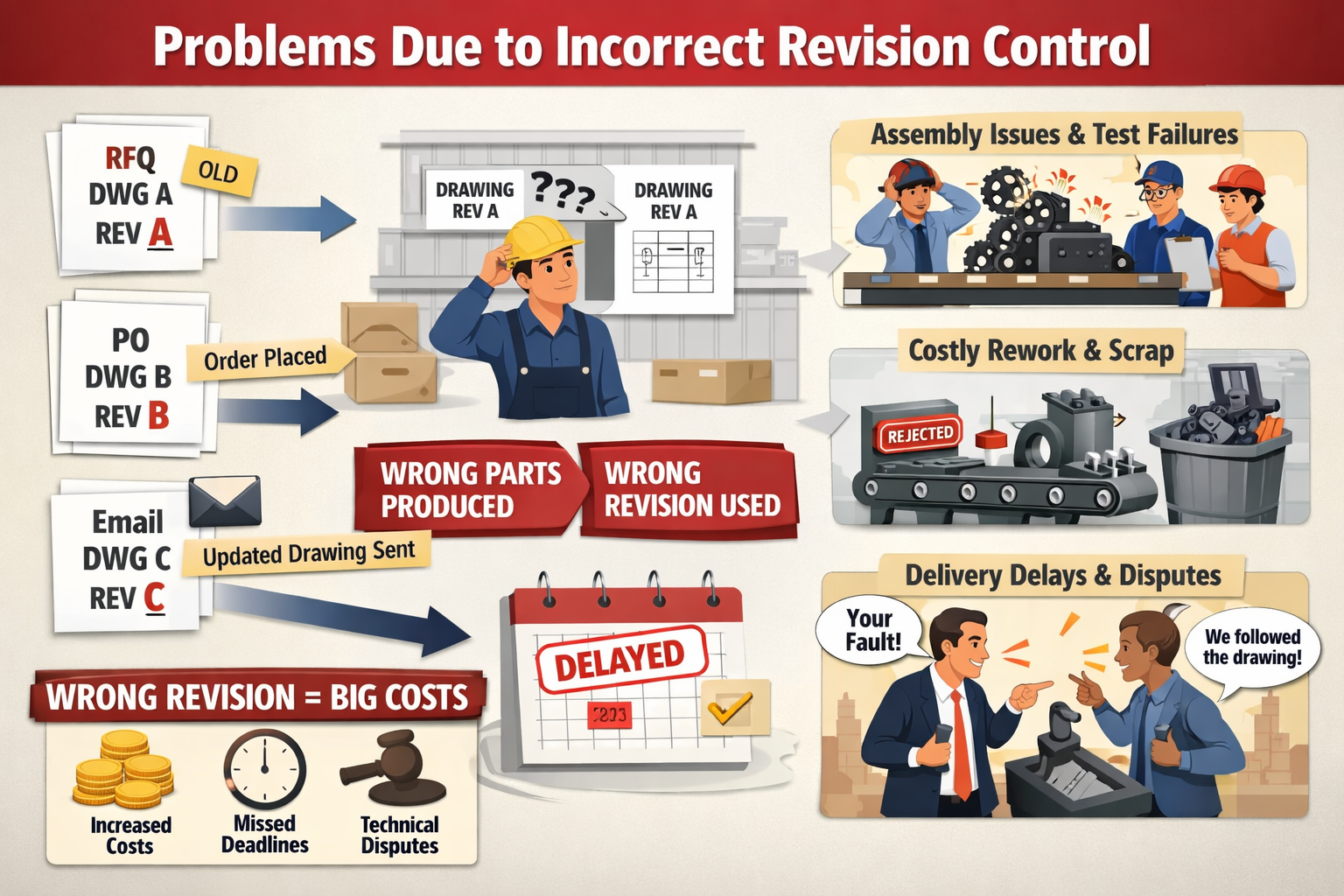
Incorrect or Missing Revision Control — The Silent Cause of Quality Failures
Revision control failures occur when the Purchase Order does not explicitly lock the exact drawing, BOM, and specification revision to be used for production. This creates ambiguity between RFQ information, engineering changes, and supplier execution, often resulting in parts that are manufactured correctly to the wrong version. Because these errors are usually discovered late and are hard to dispute, they lead to scrap, rework, and delivery delays. Effective revision control requires the PO to Learn more