Supplier Development Process — Building Suppliers You Can Reliably Depend On
Supplier development is a structured, long-term approach to improving a supplier’s capability, consistency, and accountability so they can reliably meet quality, delivery, and cost expectations. Rather than reacting to defects and delays, an effective supplier development process focuses on strengthening fundamentals such as process control, quality systems, communication discipline, and performance transparency. Organizations that invest in supplier development move from transactional buying to
2026-02-04 04:31:02
Supplier development becomes necessary when a buyer’s success is directly linked to supplier performance, yet suppliers vary widely in maturity, systems, and discipline. Many quality and delivery issues arise not from intent but from gaps in process understanding, inadequate controls, or unclear expectations. A weak supplier may initially appear capable during RFQ or pilot orders, but without structured development, hidden risks surface during scale-up, engineering changes, or demand volatility. Supplier development addresses this gap by systematically aligning supplier processes with buyer expectations rather than relying on inspection, expediting, or firefighting after problems occur.
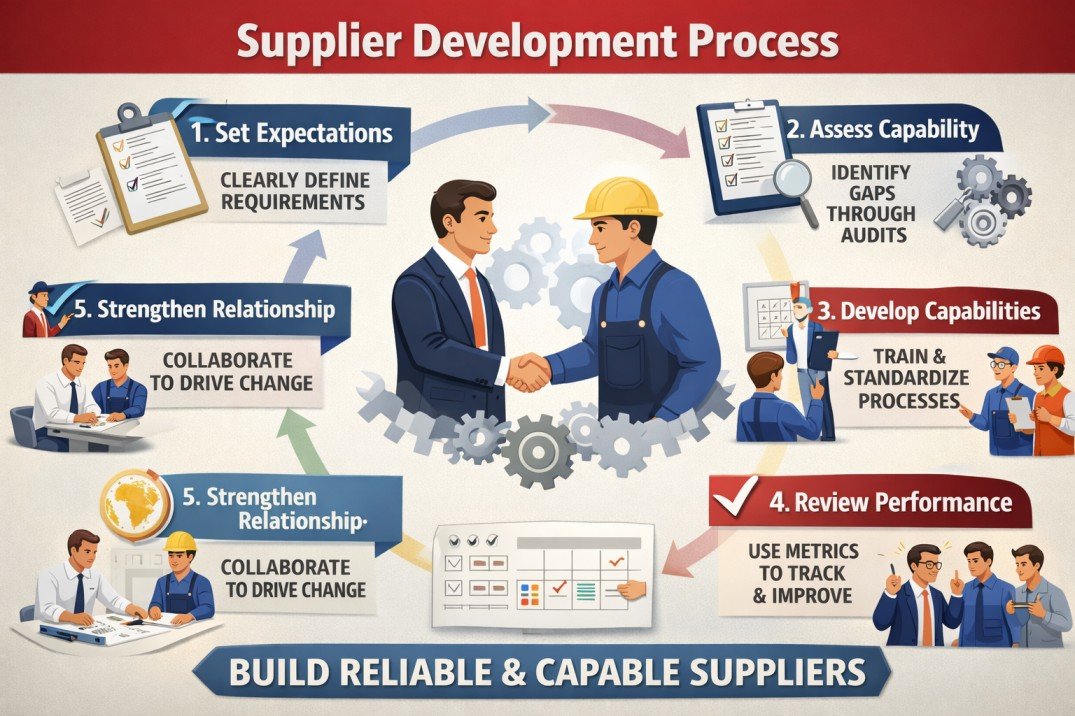
A robust supplier development process starts with clearly defined expectations. Buyers must communicate not only technical requirements but also expectations around quality planning, revision control, First Article Inspection, PPAP, change management, and delivery discipline. These expectations must be embedded into contracts and POs so they are enforceable and measurable. Once expectations are set, supplier capability must be objectively assessed through audits, process reviews, and performance data rather than assumptions or historical relationships. This assessment identifies gaps in areas such as document control, inspection capability, process stability, and problem-solving rigor, forming the basis for a focused development plan.
Development itself is a collaborative effort, not a policing activity. Effective buyers work with suppliers to close capability gaps through corrective action plans, training, standardization, and process improvement initiatives. This may include helping suppliers implement control plans, improve FAI discipline, adopt PPAP elements, strengthen traceability, or formalize change management. Regular performance reviews using agreed metrics—quality, delivery, responsiveness, and improvement effectiveness—create transparency and reinforce accountability. Over time, consistent feedback loops replace reactive escalations, and suppliers begin to self-identify risks before they become failures.
As supplier maturity improves, the relationship shifts from oversight to trust-based reliance. Developed suppliers demonstrate predictable performance, proactively communicate issues, and manage changes through formal processes rather than informal workarounds. They no longer require constant follow-up because expectations are internalized and systems are stable. In this state, buyers can reduce incoming inspection, shorten lead times, and confidently involve suppliers earlier in design and planning activities. The result is a supply base that is not only compliant but dependable, capable of supporting growth, change, and uncertainty.
Ultimately, supplier development is an investment in risk reduction. While it requires time, discipline, and cross-functional alignment, the payoff is substantial: fewer defects, fewer disputes, smoother launches, and stronger long-term partnerships. Companies that deliberately build suppliers instead of constantly replacing them gain a competitive advantage, because reliability in the supply chain is not accidental—it is engineered through structured development and sustained engagement.